Why Enterprise AI Consulting Beats $20/Month Subscriptions: The Palantir Playbook
What Happened
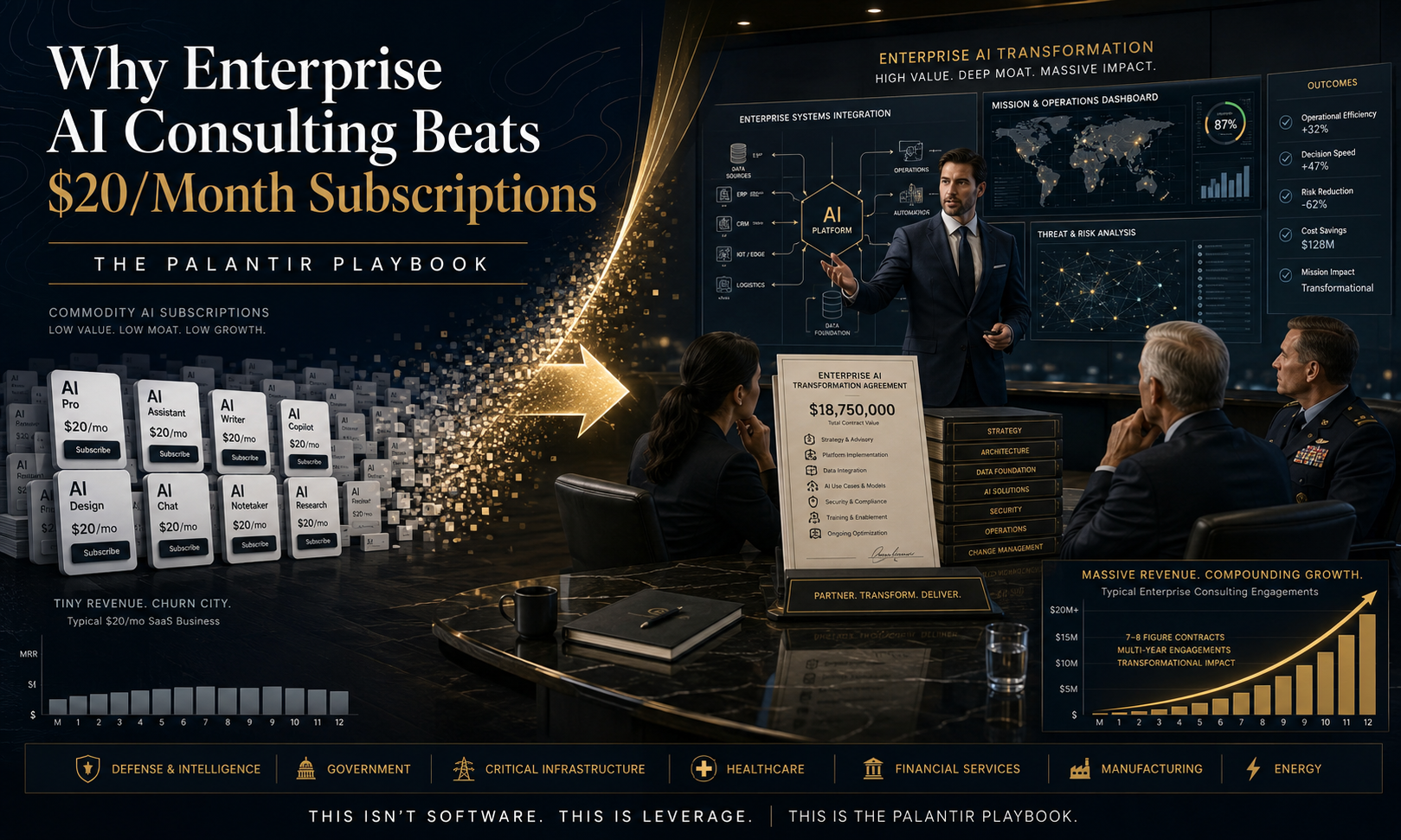
A short video from Financewayhq, citing the CEO of Nyne AI, argues that the conventional wisdom around AI monetization is backwards. The real money isn't in charging consumers $20/month for a chatbot. Instead, the biggest opportunity lies in selling to the C-suite of multi-billion-dollar companies by solving specific, high-stakes problems with custom AI solutions.
The video draws a direct parallel to Palantir's forward-deployed engineering model. Instead of a one-size-fits-all product, Palantir embeds engineers with clients to optimize data, build tailored solutions, and demonstrate measurable value. The claim is that this approach—not subscription software—is how the most successful AI companies actually generate revenue.
Editorial note: This article is based on the video's description and metadata; no transcript was available for direct quoting.
AI Tools Used
Not clearly stated in the source. The video discusses a business model rather than specific tools. For a solo builder attempting this approach, common tools would include enterprise AI platforms, data engineering stacks, and automation tools like Make (as inferred from the source's metadata). However, no specific tools are confirmed.
How It Works
The model described in the video can be broken down into a few steps:
1. Identify a high-value problem within a large enterprise—something that, if solved, directly impacts revenue, cost savings, or decision-making.
2. Get in front of decision-makers (C-suite) rather than selling to individual users.
3. Prove value with data by working closely with the client's existing data and processes.
4. Build a custom solution using AI, often involving a consultative, iterative approach.
5. Charge based on outcomes or long-term contracts, not per-seat subscriptions.
The video emphasizes that the goal is not to land a $20/month subscription but to secure deals worth hundreds of thousands or millions of dollars.
Business Opportunity
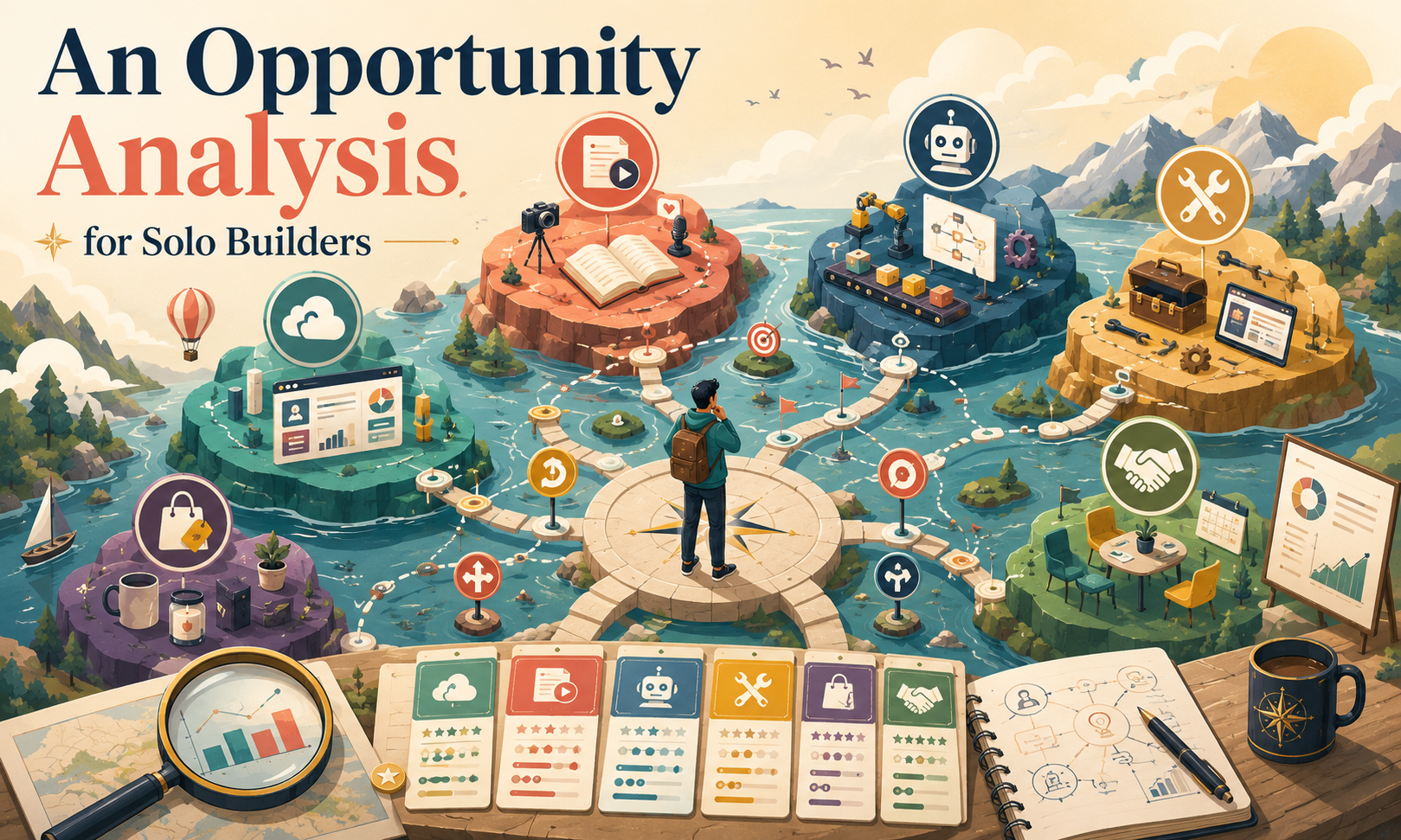
This model represents a significant opportunity for AI-focused consultants and boutique agencies, particularly those with deep domain expertise. Instead of building a generic AI product, the focus shifts to becoming a trusted partner for enterprises undergoing digital transformation.
Confirmed facts from source: The video (published July 2026) features a CEO arguing against the subscription model and in favor of enterprise consulting. No revenue figures, client names, or case study details are provided.
Editorial analysis: For a solo builder, the appeal is clear: higher revenue per client, recurring consulting contracts, and the ability to command premium pricing. However, this path requires strong sales skills, industry credibility, and the ability to navigate long sales cycles. It's not a quick side hustle—it's a serious business that demands upfront investment in relationships and expertise.
Possible business models for a solo builder:
| Model | Description | Risk Level |
|---|---|---|
| AI consulting agency | Offer custom AI solutions to mid-market or enterprise clients on a project basis. | High (sales cycle, competition) |
| Outcome-based partnership | Get paid based on measurable improvements (e.g., cost reduction %). | Very high (requires trust and measurement) |
| Niche AI product with consulting wrap | Build a focused AI tool but accompany it with hands-on onboarding and support for enterprise clients. | Medium-High |
Who is this for? Experienced AI developers or data scientists who already have a network in a specific industry (e.g., healthcare, finance, logistics). It is not for beginners looking for a passive income stream.
Key Takeaways
• The enterprise AI consulting model is real and validated by companies like Palantir, but it requires a completely different skill set than building a consumer app.
• Don't underestimate the sales and relationship-building work needed. Getting in front of a C-suite is a skill in itself.
• Start small: pick a niche industry where you have expertise, solve one concrete problem, and use that as a case study.
• Revenue potential is high, but so are upfront costs and time to first paycheck. Ensure you have runway.
• Avoid over-engineering: many enterprise problems don't need cutting-edge AI; they need reliable data pipelines and clear business logic.
• Be skeptical of vague claims: the video provides no hard evidence. Seek out real case studies from companies like Palantir or C3.ai to understand the economics.
Original video
This article is based on the original YouTube video from Financewayhq. Watch the source here: