Memmy Agent – The Business Case for a Unified AI Memory Layer
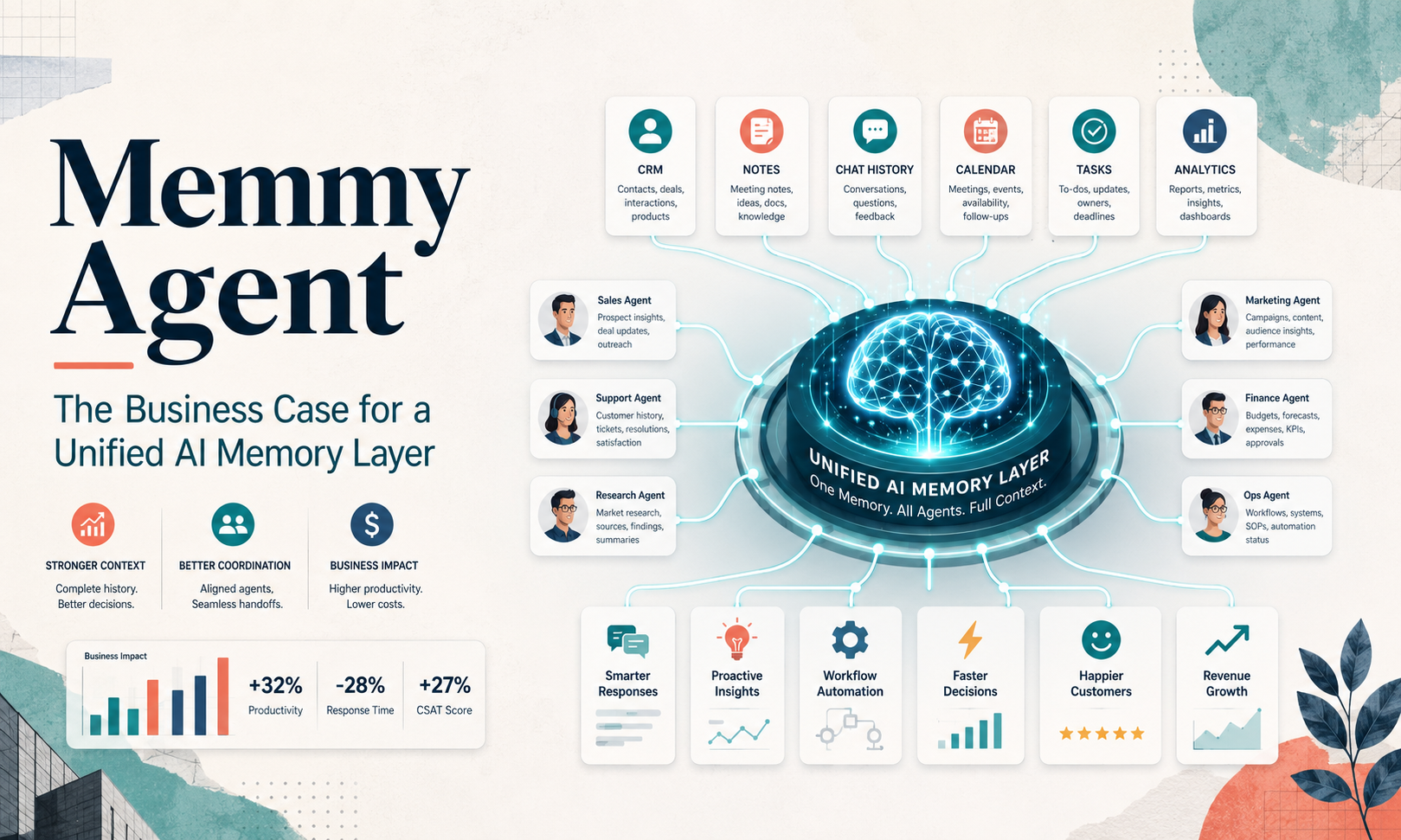
Every time you switch between ChatGPT, Claude, or a custom AI assistant, they start fresh. No memory of who you are, your preferences, or the conversation history. That fragmentation is a pain point Memmy Agent aims to solve—by giving every AI a shared memory of the same user.
The idea is simple but powerful: a unified memory layer that any AI tool can query. Instead of repeating yourself, your context follows you. For solo builders and developers, this concept opens up several service and product opportunities.
What The Product Does
Memmy Agent, as described on Product Hunt, lets "every AI remember the same you." It acts as a persistent memory store that different AI applications can read and write to. Think of it as a user profile that lives separately from any single AI model. When you talk to a chatbot, it pulls your past preferences; when you later use a writing assistant, it knows your tone and style.
The exact technical implementation isn't detailed in the launch, but the core offering is an API or integration layer that captures and serves user context across multiple AI touchpoints.
Why It Matters
Inconsistent memory is one of the biggest friction points in the current AI ecosystem. Users waste time re-establishing context, and businesses lose personalization opportunities. A unified memory layer could become infrastructure for the next generation of AI applications. For solo builders, this represents both a problem to solve and a market to serve—especially because large AI providers are unlikely to standardize memory across their competitors.
The demand is real. Search queries around "AI personalization" and "consistent AI memory" indicate users actively look for solutions. The keyword difficulty is medium, meaning there's room for new entries.
Business Opportunity
The obvious play is to build a service that acts as the memory bridge. You don't have to replicate Memmy Agent; you can offer it as a managed service or build a similar solution using existing databases and vector stores. The business model could be:
• Subscription API: Charge developers per API call or monthly fee for memory storage and retrieval.
• Freemium: Free tier for limited memory slots, paid for unlimited or faster access.
• White-label: Sell the infrastructure to agencies or SaaS companies that want branded memory assistants for their users.
Because the source doesn't include pricing or revenue data, these are inferred possibilities. The high replication potential (score 20/20) suggests the technical barrier isn't extreme for a skilled solo builder.
Who Could Build Similar Products
Solo developers with backend experience and familiarity with vector databases (like Pinecone, Chroma, or Weaviate) could build a minimal version in a weekend. If you know API design and can handle authentication and data privacy, you're positioned. The execution difficulty is medium—not trivial, but achievable for a focused indie hacker.
Target customers include:
• Small AI tool makers who want to offer personalization without building memory from scratch.
• Freelancers who run custom chatbots for clients and want to differentiate.
• Niche communities where users interact with multiple AI tools (e.g., content creators, researchers).
Monetization Ideas
Even without a ready product, you can monetize the concept in stages:
1. Sell a setup service: Help businesses integrate Memmy Agent or a similar memory layer into their workflows. Charge per integration or monthly retainer.
2. Build a no-code memory connector: Non-technical users pay for a plugin that connects their AI tools (e.g., Notion AI + ChatGPT) with a shared memory.
3. Launch a template: Create a starter kit for developers to self-host a memory agent. Sell the template on Gumroad or GitHub Sponsors.
None of these require a massive upfront investment. The key is identifying a specific pain point—like a marketer switching between AI writing tools—and solving it.
Key Takeaways
• Memmy Agent validates a real need: cross-AI memory.
• The opportunity isn't limited to being a competitor; you can build around it.
• Start small: a focused integration for two popular tools could gain traction.
• Privacy and data security will be major trust factors; plan for them early.
• Because concrete business details are missing from the source, validate demand with target users before building.
The memory layer may not be flashy, but it's the plumbing that will power personalized AI experiences. For a solo builder, that's an attractive niche to own.
This article is an original analysis based on Memmy Agent's Product Hunt launch. No revenue claims are made; all business models are inferred from the product concept.
Original source
This article uses Product Hunt as reference material. The opportunity analysis above is written to stand on its own.
What The Tool Does
Memmy Agent appears to involve an AI tool or product. Memmy Agent is a Product Hunt launch that aims to give every AI tool a consistent memory of the user. This article analyzes the business opportunity for solo builders to create or offer similar persistent memory services, including monetization ideas and first steps.
The Business Opportunity
The article should focus on how the tool could support a paid service, product, or workflow, not a pure feature review.
Services You Can Build
Possible services may include setup, implementation, automation, content production, client reporting, or workflow packaging.
Possible Customers
Look for customers with a clear problem and budget before treating the idea as a business.
Monetization Ideas
Potential paths include project fees, retainers, templates, subscriptions, or niche SaaS if source facts support them.
How to start
Start small: pick one narrow audience, write down one painful task they already pay to solve, build a manual version of the AI-assisted workflow, and try to sell the outcome before turning it into a larger product.