Can You Build a Real App in 15 Minutes with AI? A No-Code Look at Lovable AI
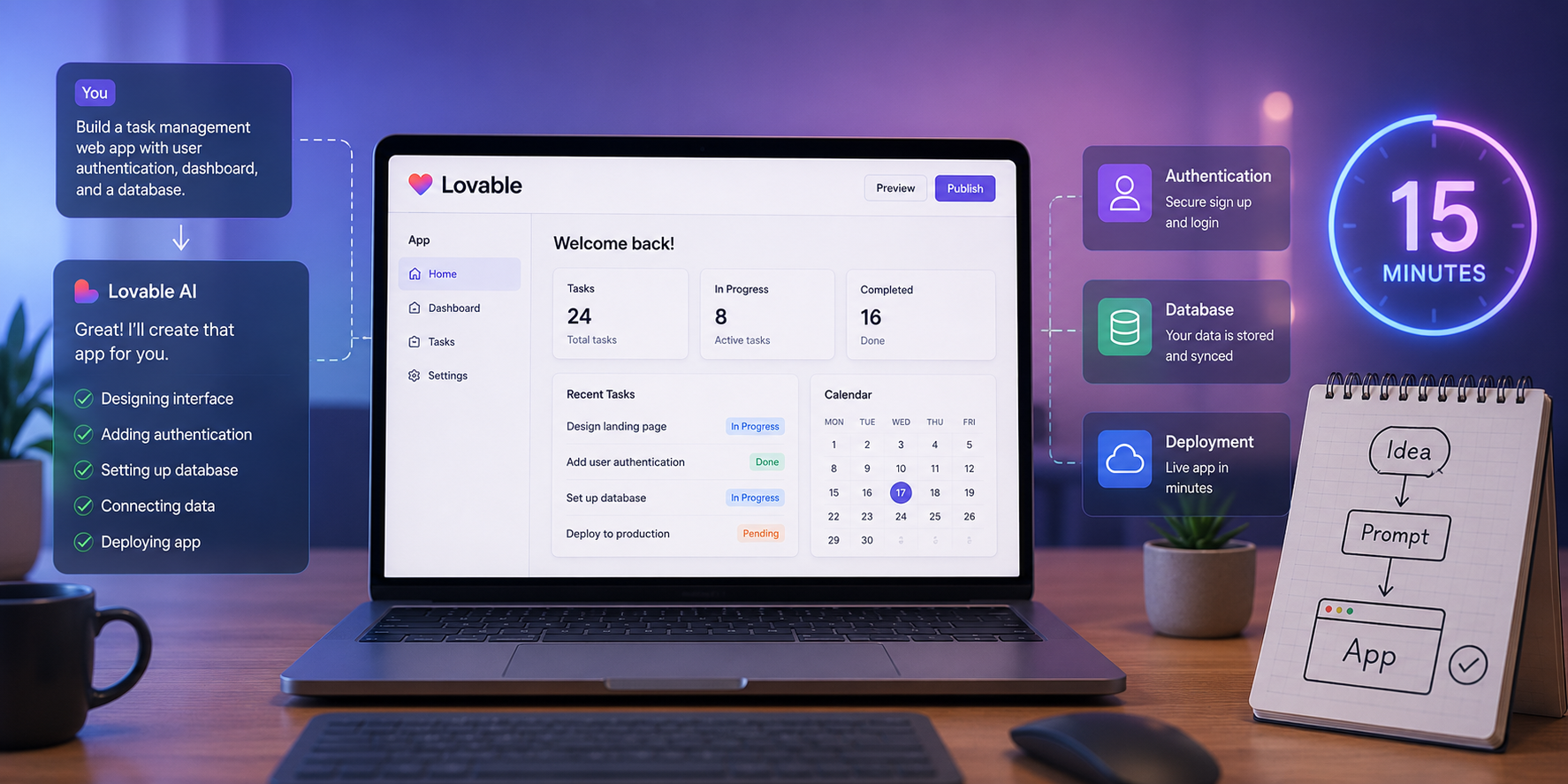
What if you could describe a web app in plain English and have it built in minutes—with authentication, a database, and deployment all handled automatically? That’s the promise of Lovable AI, a no-code tool demonstrated in a recent YouTube video by AI Toolstack. The creator claims he built a fully functional app in 15 minutes using only prompts.
It’s an intriguing sneak peek into how far AI-assisted development has come. The video shows the entire process: describing the interface, adding user authentication, setting up a database, and deploying the final product—all without writing a line of code. The tool appears to generate a working application from a short conversation.
The bigger question for anyone interested in AI side hustles or indie projects is: can this translate into real money? The video suggests three paths:
• Building SaaS products for specific niches
• Creating custom apps for local businesses (e.g., scheduling tools, order management)
• Selling software built entirely through prompts
These are reasonable directions, but the source—a low-viewership YouTube video with no transcript—does not provide any evidence of actual earnings, customer traction, or even a working example beyond the demo itself. The lack of concrete business details means this should be treated as an early-stage experiment, not a proven playbook.
For now, the takeaway is this: tools like Lovable AI are lowering the barrier to software creation. The potential is real, but the road from a 15-minute prototype to a profitable business requires customer discovery, iteration, and probably more than a few additional prompts. If you’re considering this route, start by solving a specific, small problem rather than trying to build the next unicorn on day one.
Note: This article is based on YouTube metadata and description only. The video has very low viewership and lacks verified business metrics. Monetization paths are suggested but unconfirmed.
Original video
This article is based on the original YouTube video from AI Toolstack. Watch the source here: