Inside the AI App Playbook: How a Teen Built a $225K Side Hustle Without Coding
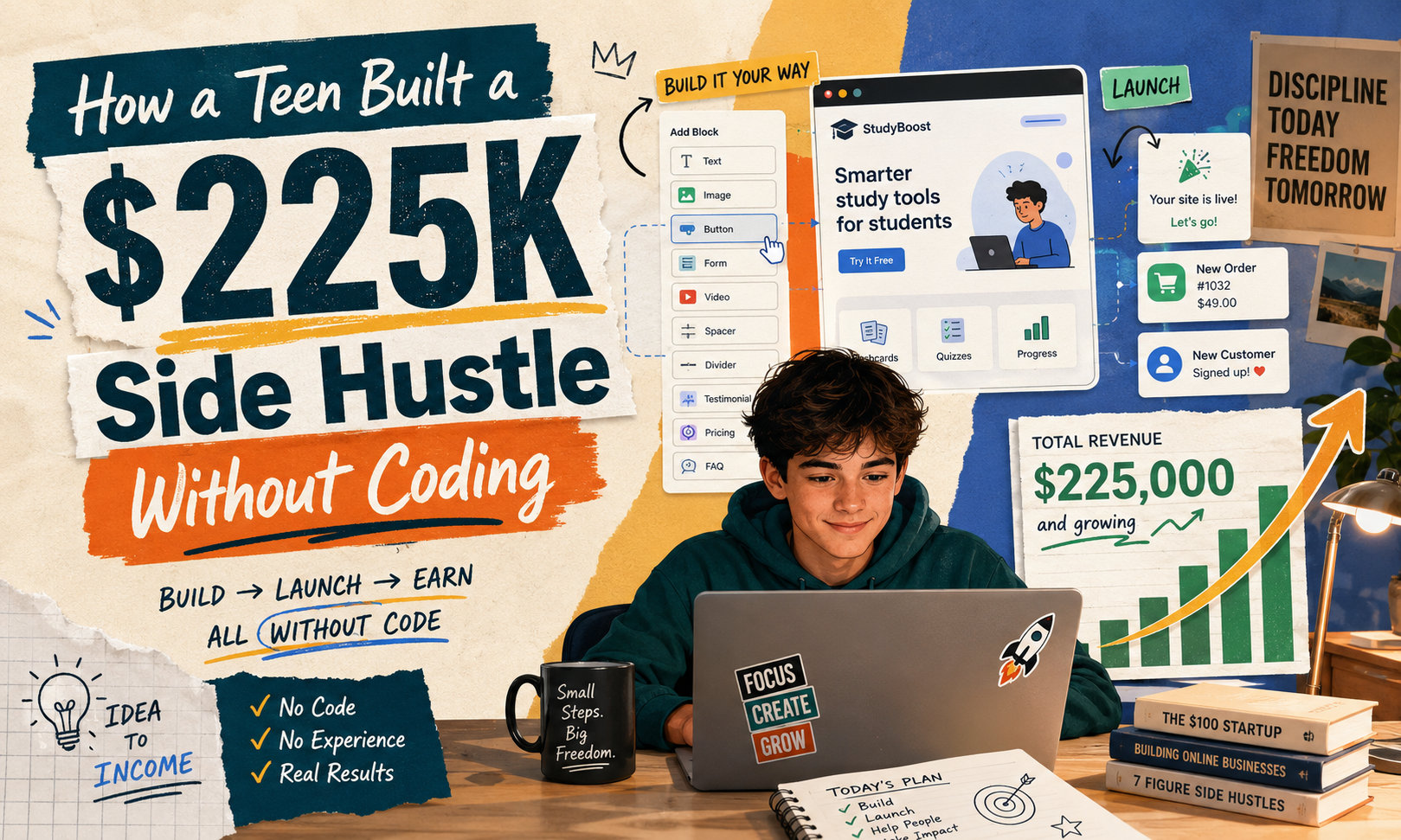
Building AI-powered mobile apps without writing a line of code sounds like a pipe dream for most. But a recent case shared on The Koerner Office Podcast claims otherwise. George Lampro, a teen entrepreneur, reportedly generated roughly $225,000 in nine months by launching niche AI apps—starting with WrestleAI, a wrestling-themed app. He then scaled two newer apps to $10,000 in just 45 days using paid ads and influencer partnerships.
This isn't a get-rich-quick story. It's a playbook worth examining for anyone looking to enter the AI side hustle space with minimal technical overhead. Let's break down what happened, how it works, and whether you could replicate it.
What Happened
George Lampro appeared on the podcast to share his journey building AI-powered mobile apps with zero coding experience. According to the video description, he launched WrestleAI and grew it through niche influencer collaborations. After proving the concept, he used Meta (Facebook/Instagram) ads to scale two additional apps, hitting $10K in revenue within 45 days. His total revenue over nine months was roughly $225,000.
Confirmed facts: The video description states these figures and outlines the strategy. However, no independent verification of revenue or user numbers is available. Take the dollar amounts as the creator's claim, not audited data.
Editorial analysis: The standout element isn't the revenue—it's the speed. Going from zero to $10K in 45 days with paid ads suggests strong product-market fit in a niche. The use of no-code AI tools and influencer marketing lowered the barrier to entry significantly.
AI Tools Used
The source does not explicitly name the AI tools used to build the apps. However, the podcast community and related content often reference no-code platforms like Make (integrations), Bubble, Adalo, or FlutterFlow combined with AI APIs (e.g., OpenAI, Claude). The extracted tool from the source is Make, likely used for automation and backend workflows.
Confirmed: Make (integration platform) is detected.
Editorial inference: Building AI features likely involved using an AI API (ChatGPT, Claude, or similar) within a no-code mobile app builder. The exact stack remains unclear.
How It Works
Based on the description, George's playbook has four steps:
1. Find a niche with a strong visual hook. For WrestleAI, wrestling content has fan bases that engage heavily with visual features (e.g., AI-generated wrestler images, match predictions). The visual angle makes the app shareable.
2. Partner with niche influencers. Rather than broad ads, he worked with wrestling content creators to drive initial downloads and credibility.
3. Test Meta ads. Once the app showed organic traction, he invested in Facebook and Instagram ads to scale. The 45-day ramp to $10K suggests a repeatable ad strategy.
4. Monetize with yearly subscriptions. Recurring revenue through annual subscriptions (likely $20–$50/year) provides predictable income and higher LTV than one-time purchases.
The exact ad creatives, targeting, and conversion metrics are not shared, so execution details are missing.
Business Opportunity
This model is attractive for solo builders because it requires no coding, leverages existing AI APIs, and targets passionate but underserved niches. The core opportunity:
• Niche AI apps: Instead of building a broad AI tool, focus on a specific hobby, sport, or community (e.g., fantasy sports, pet identification, retro gaming).
• Influencer seeding: Reach out to micro-influencers in that niche with a free app version or affiliate deal.
• Paid ads as accelerator: Once you have conversion data, scale with Meta ads. George's 45-day ramp shows it's possible to hit profitability quickly if the unit economics work.
Who this is for: Marketers, no-code enthusiasts, and indie hackers willing to spend time on niche research and influencer outreach. Not for those expecting passive income without upfront ad spend.
Risks and limitations:
• Paid ads can burn cash if the app doesn't convert. George's model likely had good retention, but many niches won't.
• Subscription churn is a real threat; yearly subscriptions help but require constant value delivery.
• App store competition is fierce. A single niche can be saturated quickly.
• Revenue claims are unverified. Assume $225K is gross, not net (ads, influencer payments, and app store fees reduce it).
Key Takeaways
1. Start with a niche that has a strong visual or interactive hook. AI can generate images, recommendations, or comparisons—use that to create shareable content.
2. Influencer marketing before paid ads. Build organic traction first to validate demand. Micro-influencers cost less and yield higher trust.
3. Test Meta ads with small budgets. Start at $50/day and scale only after hitting positive ROI. George's 45-day window suggests aggressive but data-driven scaling.
4. Focus on recurring revenue. Yearly subscriptions smooth cash flow and reduce churn. Offer a free trial to lower friction.
5. Don't rely on one app. George built a portfolio. If one niche fades, others can sustain income.
Final thought: This case is promising but not a blueprint you can copy blindly. The real skill is finding a niche where AI adds clear value and where influencers can amplify your launch. If you're willing to test and learn, the no-code AI app space is still wide open for solo builders.
Original video
This article is based on the original YouTube video from Chris Koerner on The Koerner Office Podcast. Watch the source here: