I have a slightly embarrassing confession.
Whenever I see a new AI product doing real revenue, my first reaction is usually:
“How complicated would this be to rebuild?”
That is probably the wrong first question.
The more useful question is:
“Why are people willing to pay for this instead of opening ChatGPT and doing it themselves?”
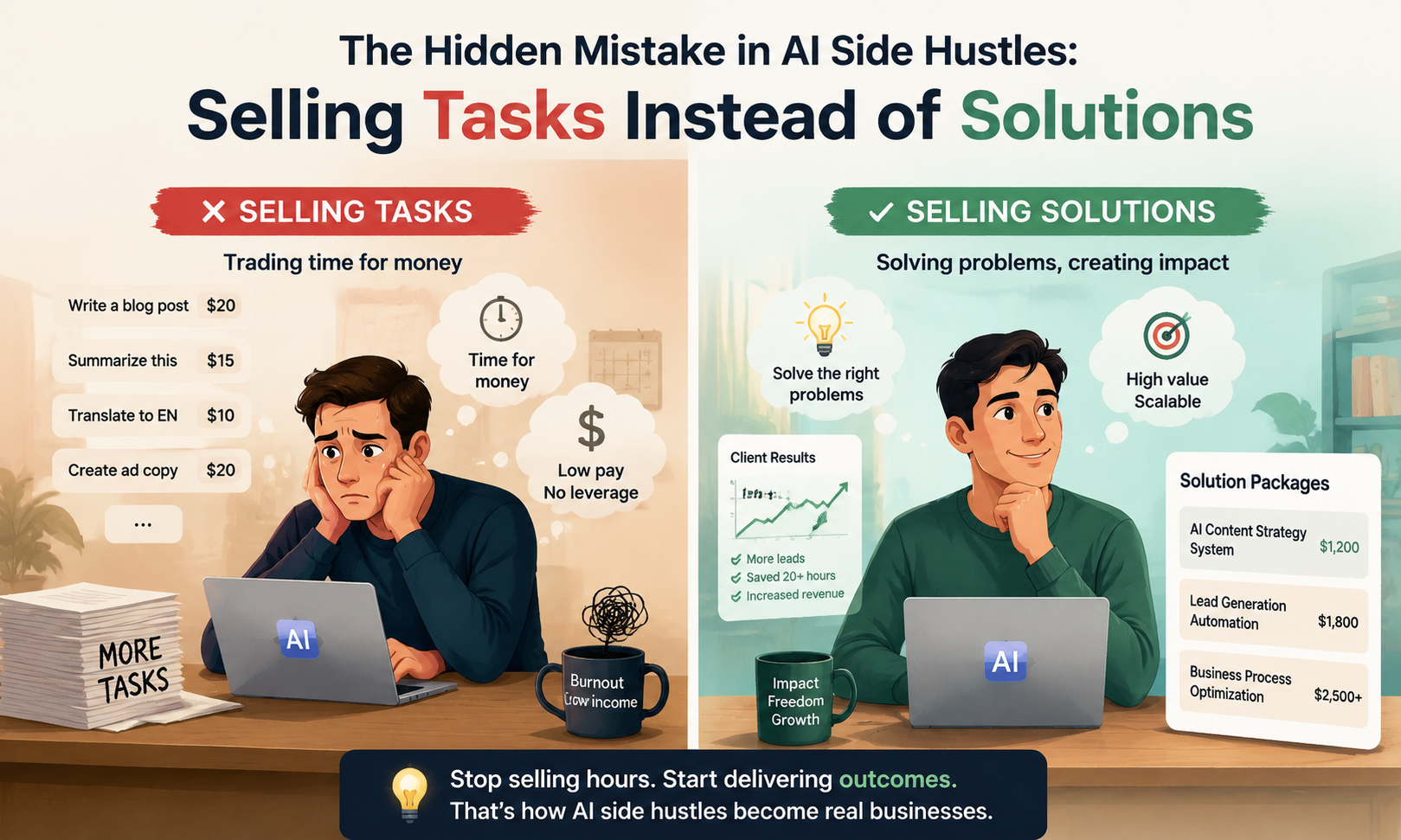
That question becomes especially important with AI content products. Generating text, images, scripts, and ideas is already cheap. If your product does nothing more than place a friendly interface in front of an API, customers can usually replace it with another tool in a few minutes.
RankAI, Produce.so, and Talefy are interesting because they all use AI to create content, but they sell three completely different outcomes:
* RankAI sells business growth through search.
* Produce.so sells a production system for long-form YouTube videos.
* Talefy sells personalized entertainment and creative participation.
One targets businesses with an expensive recurring service. One serves creators who want to operate like a media team. One uses lower-priced consumer payments across a much larger audience.
The underlying AI is not the most important part of any of them.
The workflow, customer, and reason to keep paying are what make these products worth studying.
1. RankAI: Sell the Result, Not Another SEO Dashboard
Website: [RankAI](https://rankai.ai/)
Verified revenue profile: [RankAI on TrustMRR](https://trustmrr.com/startup/rankai)
RankAI is an AI-powered website growth platform focused on SEO and AI search visibility.
Its pitch is not:
“Here are 128 problems with your website.”
Its pitch is closer to:
“We will find opportunities, publish pages, measure the results, and keep improving the site.”
That difference is the entire business.
Most SEO tools provide information. They show keyword volumes, rankings, backlinks, technical issues, or competitor pages. The customer receives a dashboard full of work that still needs to be completed.
RankAI attempts to execute more of that work.
According to the company’s website, its system studies the business and its market, discovers content opportunities, publishes pages, measures performance, and iterates based on the results.
That turns the product from an analytics tool into an ongoing growth operation.
The Revenue Model
As of July 15, 2026, RankAI’s TrustMRR profile reported:
* $58,647 in monthly recurring revenue
* 174 active subscriptions
* $357,291 in total recorded revenue
* Revenue connected to a verified Stripe account
* A launch date of June 2023
Dividing MRR by active subscriptions produces a rough average of $337 per subscription per month.
That number should not be treated as the exact price of every account. Different plans, discounts, agency packages, and billing arrangements can affect the average.
It does tell us something important, though:
RankAI is not competing as a cheap AI writing tool.
It is pricing itself closer to a business growth service.
Why Customers Pay
A company does not really want 20 AI-generated blog posts.
It wants:
* More qualified search traffic
* More mentions in AI-generated answers
* More product and commercial pages ranking
* More leads or purchases
* Less manual work for its marketing team
This lets RankAI charge based on business value instead of the number of words it generates.
If a company earns thousands of dollars from a new customer, paying a few hundred dollars per month for search growth can be reasonable. Charging the same amount for “AI article generation” would be much harder.
What Actually Makes the Product Difficult
It would be fairly easy to build a basic interface that accepts a keyword and generates an article.
That would not be RankAI.
The difficult part is the feedback loop:
1. Understand the customer’s products and brand.
2. Identify useful search opportunities.
3. Decide which type of page should target each opportunity.
4. Create and publish the page.
5. Measure impressions, clicks, rankings, and conversions.
6. Compare performance with the original goal.
7. Improve or replace pages that are not working.
8. Repeat the process without damaging existing traffic.
Every step creates possible failure points.
The AI could misunderstand the product. It could produce unsupported claims. A generated page could compete with an existing page. Search intent could be classified incorrectly. An automatic rewrite could remove something that was already performing well.
The real engineering challenge is not content generation.
It is building a controlled system that can take action, measure the outcome, and decide what to do next.
A Smaller Version a Solo Founder Could Build
I would not begin by promising fully autonomous SEO.
That creates too much risk and requires too much domain knowledge.
A more realistic first product would be an AI content opportunity and refresh assistant.
The MVP could:
* Connect to Google Search Console
* Find pages losing impressions or clicks
* Identify queries where the page ranks outside the top results
* Compare the existing page with competing pages
* Suggest missing questions, sections, and internal links
* Produce a revised draft
* Require human approval before publishing
* Measure performance after the update
This is narrower, easier to explain, and safer than automatically rewriting an entire website.
The Business Opportunity
There is also an agency version.
Instead of selling software immediately, a founder could sell a managed service:
“Every month, I identify your highest-potential search pages, improve them with AI, add internal links, and report what changed.”
The founder performs the first ten projects manually with help from AI.
Once the repeated steps become obvious, those steps become software.
That is often a better path than spending six months building a dashboard before speaking to a customer.
2. Produce.so: Sell a Finished Media Workflow
Website: [Produce.so](https://produce.so/)
Produce.so focuses on creating high-authority, long-form YouTube content with AI.
This is a much more specific promise than “make AI videos.”
The product is aimed at a demanding category of creator: people producing documentary-style, educational, commentary, or faceless YouTube videos that may run for 20 minutes or longer.
These videos require much more than typing a prompt into a video generator.
A typical workflow includes:
1. Finding a viable topic
2. Researching the subject
3. Creating an outline
4. Writing a long script
5. Breaking the script into scenes
6. Recording or generating narration
7. Finding supporting footage
8. Creating graphics and transitions
9. Editing the timeline
10. Adding captions, music, and final polish
A creator may use six or seven separate tools before a video is ready.
Produce.so is valuable because it attempts to turn those disconnected steps into one production system.
An Important Change in the Product
Produce.so’s current public website describes the product as being exclusively integrated into the Blake Ryan mentorship program.
That matters.
It suggests the product is no longer being positioned only as a standard self-serve SaaS subscription. It is now part of a broader offer that may combine software, education, templates, strategy, and community.
This is a useful business lesson on its own.
Sometimes software is more valuable as the delivery engine for a premium program than as a standalone subscription.
A creator does not simply need a video-generation button. They also need to know:
* Which niche to choose
* What types of videos attract views
* How to structure a channel
* How often to publish
* How to improve thumbnails and retention
* How to monetize the audience
* How to judge whether the output is good
Software solves the production problem.
Education and mentorship solve the decision-making problem.
Combining the two can support a much higher price than selling access to an AI tool alone.
Why Long-Form Video Is Harder Than It Looks
AI video demos often show an attractive five-second clip.
A 30-minute YouTube video is an entirely different product.
The challenge is consistency.
The narration must sound like one coherent argument. Visuals need to match what is being discussed. Names and facts must remain accurate. The pacing cannot feel identical for half an hour. Music and transitions should support the story rather than distract from it.
A long-form video system therefore needs a pipeline, not a single model call.
A practical system might use:
* A language model for research assistance and script structure
* A separate fact-checking and source-review stage
* Text-to-speech for narration
* Licensed stock footage or user-provided assets
* Image generation for supporting visuals
* Templates for charts and text animations
* FFmpeg or a rendering framework for final assembly
* Human review before export
The cost of generation can also become significant. Video storage, rendering time, narration, image generation, and third-party media APIs all create expenses before the customer publishes anything.
This makes usage limits and pricing design especially important.
A Smaller Version a Solo Founder Could Build
Trying to build a complete long-form video studio would be ambitious.
A better MVP would focus on one expensive step.
For example:
#### Option A: Research-to-Script Tool
The customer provides a topic and source links.
The tool produces:
* A research summary
* A source list
* A video hook
* A structured outline
* A complete script
* Suggested visual directions for each section
#### Option B: Script-to-Storyboard Tool
The customer uploads a finished script.
The tool breaks it into scenes and suggests:
* B-roll
* Screenshots
* Charts
* On-screen text
* Image-generation prompts
* Estimated scene durations
#### Option C: Faceless Video Assembly Service
Instead of building software, sell a managed service that turns one approved script into a finished video using a controlled combination of templates, stock assets, AI narration, and human editing.
Option C is the easiest way to test whether customers will actually pay.
If you cannot sell the service manually, adding more automation probably will not fix the offer.
The Business Opportunity
The strongest positioning would not be:
“Create unlimited AI videos.”
That sounds cheap and usually attracts high usage with low willingness to pay.
A stronger offer would be:
“Turn one approved expert article into a polished 15-minute YouTube video every week.”
Now the customer understands the input, output, frequency, and business value.
Narrow workflows are easier to automate and easier to sell.
3. Talefy: Turn AI Generation Into a Consumer Habit
Website: [Talefy](https://talefy.ai/)
Verified revenue profile: [Talefy on TrustMRR](https://trustmrr.com/startup/talefy)
Talefy is an AI-powered interactive storytelling platform.
Users can explore existing stories or create their own worlds, characters, and story directions. Instead of reading a fixed novel, they influence what happens next.
This changes the role of the customer.
They are not only a reader.
They are also a participant, director, and sometimes a creator.
That is a powerful product loop because the user is emotionally invested in content shaped around their choices.
The Revenue Model
As of July 15, 2026, Talefy’s TrustMRR profile reported:
* $25,535 in monthly recurring revenue
* 870 active subscriptions
* $891,877 in total recorded revenue
* Revenue connected to a verified Stripe account
* A launch date of May 2023
That gives Talefy a rough average of $29 per active subscription per month, although this is not necessarily the price of a standard plan.
Talefy advertises entry pricing starting at $1.99, so the higher average may reflect credit purchases, different subscription levels, add-ons, or other payment behavior.
The exact mix is not publicly established. What matters is that the product has found ways to monetize beyond a single expensive business subscription.
Why Interactive Stories Can Be Sticky
A generic AI writing tool has low switching costs.
You type a prompt, receive some text, and leave.
An interactive story platform can accumulate:
* Saved stories
* Character relationships
* Previous decisions
* Unfinished plotlines
* Favorite genres
* Personalized recommendations
* User-created worlds
* Emotional attachment to characters
The longer someone uses it, the more personal context exists inside the product.
Leaving means abandoning more than a text generator. It may mean abandoning an ongoing fictional world.
That is a much stronger retention mechanism.
What Makes the Product Difficult
Again, generating a paragraph is not the hard part.
The hard part is remembering what the story has already established.
An interactive story may need to track:
* Character identities and motivations
* Relationships
* Locations
* Items and abilities
* Previous choices
* Unresolved conflicts
* Story tone
* World rules
* Information each character knows
* Possible future branches
If the AI forgets that a character disappeared three chapters ago, the illusion breaks.
Sending the entire story back to the model every time is expensive and eventually becomes impractical. A better system uses structured state and layered memory.
For example:
* Keep permanent world rules in a story bible.
* Store character facts in structured records.
* Summarize completed chapters.
* Retrieve only past events relevant to the current scene.
* Track important choices as state variables.
* Give the model recent scenes rather than every word ever generated.
This is not just prompt engineering.
It is product and narrative-engine design.
A Smaller Version a Solo Founder Could Build
Do not start with every genre and every type of reader.
Choose one audience with a recognizable fantasy.
Examples might include:
* Personalized bedtime adventures for families
* Mystery stories for language learners
* Interactive romance stories
* Tabletop RPG campaign companions
* Historical adventures for students
* Corporate training simulations
* Personalized fiction gifts
* Choose-your-own-path horror stories
A focused MVP could include:
1. One genre
2. A small set of visual styles
3. A simple character creator
4. Three choices after each scene
5. Save and resume
6. A credit system
7. Shareable story pages
You do not need a complex public community at the beginning.
First prove that users finish stories, return to continue them, and pay for additional generations.
The Business Opportunity
Talefy also shows why entertainment products should not be judged only by productivity.
A business tool makes money by saving time or creating financial value.
An entertainment product can make money by creating curiosity, emotion, identity, and anticipation.
The user pays because they want to know what happens next.
That is a completely different motivation—and potentially a very strong one.
The Three Business Models Side by Side
| Product | Primary Customer | What It Really Sells | Monetization Logic | Main Technical Challenge |
|---|---|---|---|---|
| RankAI | Businesses and agencies | Search growth and execution | High-value recurring B2B plans | Measuring and improving content safely |
| Produce.so | YouTube creators and media entrepreneurs | A long-form production workflow | Software combined with a premium program | Coordinating a long, multi-model video pipeline |
| Talefy | Readers, gamers, and hobbyist creators | Personalized interactive entertainment | Subscription and lower-priced consumer purchases | Story memory, state, and narrative consistency |
This comparison reveals something I think many AI founders miss.
The same underlying models can support very different businesses.
You can use a language model to:
* Produce commercial pages for a company
* Write documentary-style video scripts
* Generate the next chapter of a romance story
The API may be similar.
The customer’s reason for paying is completely different.
Five Lessons I Would Steal From These Products
1. Vertical AI Beats a Generic Generation Box
None of these products leads with:
“Type anything and AI will generate content.”
They each define a specific job.
RankAI grows websites.
Produce.so creates long-form YouTube content.
Talefy creates interactive stories.
A vertical product can include the vocabulary, workflow, templates, quality checks, and interface that a general chatbot does not provide by default.
That is where much of the value comes from.
2. High Prices Come From Expensive Problems
RankAI can support a higher average subscription value because businesses already spend money on SEO, agencies, writers, developers, and growth teams.
Produce.so targets a workflow that normally requires writers, voice talent, researchers, editors, and several software subscriptions.
Customers are not comparing these products only with the cost of an AI API.
They are comparing them with the cost of the old workflow.
Before setting a price, ask:
What does the customer currently spend—in money or time—to achieve the same result?
3. The Workflow Is More Defensible Than the Model
None of these businesses needs to train a foundation model from scratch.
They can combine existing models with:
* Customer context
* Structured workflows
* Templates
* Analytics
* Memory
* Publishing connections
* Review systems
* Domain-specific decisions
Models will become cheaper and more capable.
That does not automatically destroy vertical products. It may make the workflow cheaper to operate.
The danger appears when the product has no workflow—only a prompt and an API call.
4. User-Created Assets Increase Retention
RankAI customers accumulate published pages and performance history.
Produce.so users accumulate scripts, videos, channel templates, and production settings.
Talefy users accumulate stories, characters, choices, and fictional worlds.
These assets give customers a reason to return.
But founders should not use lock-in as an excuse to trap users. Exporting data and respecting ownership can increase trust.
The goal is to make the product more valuable over time, not to make leaving artificially painful.
5. Start With a Service Before Building the Full Platform
Each of these ideas can be tested manually.
You can provide an AI-assisted SEO refresh service before building RankAI.
You can produce faceless YouTube videos for clients before building Produce.so.
You can create personalized interactive stories for a small community before building Talefy.
The manual version teaches you:
* What customers actually request
* Which steps repeat
* Where quality breaks
* What requires human judgment
* How much delivery costs
* Whether customers return
* What they are willing to pay for
Once you know those answers, you are no longer guessing what software to build.
You are automating a workflow that already makes money.
Which Idea Is Best for a Solo Founder?
If I were choosing based only on technical complexity, I would rank them like this:
1. A focused interactive story product
2. A narrow YouTube production tool
3. A fully autonomous SEO growth platform
But technical difficulty should not decide the business.
Your existing advantage matters more.
If you already understand SEO and have access to business clients, the RankAI direction may be your best opportunity.
If you operate YouTube channels or work with creators, a narrow Produce.so-style workflow may be easier to sell.
If you understand fiction communities, romance audiences, role-playing games, or fandom behavior, a Talefy-style product may be the strongest fit.
The best AI business is rarely the one with the easiest code.
It is the one where you understand the customer better than the next developer.
My Final Take
RankAI, Produce.so, and Talefy are not really selling AI-generated content.
They are selling three different transformations:
* From an underperforming website to a growth system
* From one creator to a repeatable media operation
* From passive reading to a personalized fictional experience
That is the part worth copying.
Do not copy their landing pages or recreate every feature.
Find a smaller audience, isolate one expensive or emotionally compelling problem, and build the shortest useful workflow around it.
AI can generate the content.
Your product still needs to create the reason to pay.